

JMERC
Owner
Janbazan Medical and Engineering Research Center (JMERC) is the owner of IJWPH.

1.0
Cite Score 2025
SJR: 0.129 / SNIP: 0.140
Volume 18, Issue 2 (2026)
Iran J War Public Health 2026, 18(2): 235-241 |
Back to browse issues page
Article Type:
Subject:




History
Received: 2026/06/16 | Accepted: 2026/08/3 | Published: 2026/08/8
Received: 2026/06/16 | Accepted: 2026/08/3 | Published: 2026/08/8
How to cite this article
Tahir N, ALShaban S, Akram R, Shalgam D, Ammar Waham Ashor A, Alrubaye H. Comparison of Vitamin B12 Levels between Diabetic Patients with and without Hypothyroidism. Iran J War Public Health 2026; 18 (2) :235-241
URL: http://ijwph.ir/article-1-1804-en.html
URL: http://ijwph.ir/article-1-1804-en.html
Download citation:
BibTeX | RIS | EndNote | Medlars | ProCite | Reference Manager | RefWorks
Send citation to:


Rights and permissions
BibTeX | RIS | EndNote | Medlars | ProCite | Reference Manager | RefWorks
Send citation to:

Authors
N.T. Tahir *1, S.A.W. ALShaban2, R.S. Akram2, D.O. Shalgam1, A.W. Ammar Waham Ashor3, H.D. Alrubaye3
1- National Diabetes Center, Mustansiriyah University, Baghdad, Iraq
2- Department of Chemistry and Biochemistry, Faculty of Medicine, Mustansiriyah University, Baghdad, Iraq
3- Department of Internal Medicine, Faculty of Medicine, Mustansiriyah University, Baghdad, Iraq
2- Department of Chemistry and Biochemistry, Faculty of Medicine, Mustansiriyah University, Baghdad, Iraq
3- Department of Internal Medicine, Faculty of Medicine, Mustansiriyah University, Baghdad, Iraq
Full-Text (HTML) (4 Views)
Introduction
The two most prevalent endocrine conditions are diabetes mellitus and thyroid dysfunction, and patients often have both conditions simultaneously [1]. These disorders share several pathophysiological mechanisms and risk factors, including obesity, insulin resistance, and autoimmune dysfunction. The coexistence of diabetes and thyroid dysfunction may complicate disease management and adversely affect metabolic control. Therefore, patients with either condition may benefit from regular screening for the other. Early identification and appropriate treatment of both disorders can help reduce the risk of associated complications. Hypothyroidism, which is characterized by low levels of thyroid hormones in the blood, has also been shown to cause glucose intolerance and impaired peripheral insulin sensitivity [2]. Furthermore, hypothyroidism is associated with other metabolic conditions, such as obesity, hypertension, and dyslipidemia, all of which may exacerbate insulin resistance and contribute to the development of type 2 diabetes over time [2]. These metabolic abnormalities may impair glucose utilization and promote adipose tissue accumulation. In addition, reduced thyroid hormone activity can alter lipid metabolism and increase the risk of cardiovascular complications. The coexistence of hypothyroidism and insulin resistance may make glycemic control more difficult in affected patients. Therefore, regular assessment of thyroid function and metabolic parameters may support the early detection and management of these interrelated conditions. Vitamins, such as A, E, D, and B, have a moderating effect on thyroid function. Previous studies have documented vitamin deficiencies in patients with type 2 diabetes mellitus (T2DM) [3]. These deficiencies may influence glucose metabolism, insulin sensitivity, and the regulation of thyroid hormone synthesis and activity. In particular, inadequate vitamin D and B-vitamin levels have been associated with metabolic disturbances in individuals with T2DM. Assessing and addressing relevant vitamin deficiencies may therefore be an important component of the comprehensive management of patients with coexisting thyroid dysfunction and diabetes.
Because it is essential for many metabolic processes, vitamin B12 is one of the most important B-complex vitamins. Cobalamin, commonly known as vitamin B12, is an essential component of enzymes such as methylmalonyl-CoA mutase and plays a key role in hematopoiesis [4]. Although the causes may be complex, the comorbidity of other autoimmune conditions and dietary practices are the main causes of vitamin B12 inadequacy in patients with TD [5]. Vitamin B12 is also involved in DNA synthesis, neurological function, and healthy red blood cell production. Its deficiency can result in megaloblastic anemia, fatigue, peripheral neuropathy, and cognitive changes. Patients with autoimmune thyroid disorders may be particularly susceptible to B12 deficiency because of the potential coexistence of pernicious anemia and other autoimmune diseases. In addition, individuals following vegetarian or vegan diets may have an increased risk of inadequate B12 intake because the vitamin is found primarily in animal-derived foods. Consequently, monitoring serum vitamin B12 levels may be beneficial in patients with thyroid disease who present with anemia, neurological symptoms, or other clinical indicators of deficiency.
Vitamin B12 deficiency frequently coexists with hypothyroidism [6]. The association between autoimmune thyroid disorders and vitamin B12 deficiency is probably related to the coexistence of other autoimmune conditions, such as atrophic gastritis and pernicious anemia, both of which reduce vitamin B12 absorption [7]. Pernicious anemia is characterized by the loss of intrinsic factor, which is necessary for the absorption of vitamin B12 in the terminal ileum. Atrophic gastritis may further impair absorption by damaging the gastric mucosa and reducing gastric acid production. Patients with autoimmune thyroid disease may therefore be at increased risk of developing megaloblastic anemia and other manifestations of vitamin B12 deficiency. Clinical symptoms may include weakness, pallor, glossitis, numbness, tingling, impaired balance, and cognitive difficulties. Because some neurological complications can progress despite relatively mild hematological abnormalities, early recognition of vitamin B12 deficiency is important. Routine assessment of vitamin B12 levels and related biomarkers may consequently be considered in patients with hypothyroidism, particularly those with autoimmune disease, anemia, or neurological symptoms. The prevalence of vitamin B12 deficiency among individuals with hypothyroidism increases with age [8]. This may be associated with age-related changes in gastrointestinal function, reduced dietary intake, and the increased occurrence of autoimmune disorders in older adults. Older patients with hypothyroidism may also experience nonspecific symptoms, such as fatigue, weakness, and cognitive changes, which can overlap with manifestations of vitamin B12 deficiency. Therefore, screening for vitamin B12 deficiency may be particularly important in older individuals with hypothyroidism who present with anemia, neurological symptoms, or persistent fatigue. Patients with hypothyroidism and vitamin B12 deficiency typically experience symptoms associated with both conditions, such as weakness, fatigue, itching, loss of sensation, and poor memory retention [9, 10]. These symptoms may overlap, making it difficult to determine which condition primarily drives a patient’s clinical presentation. Vitamin B12 deficiency may
additionally cause paresthesia, impaired balance, glossitis, and megaloblastic anemia, whereas hypothyroidism is often associated with cold intolerance, weight gain, dry skin, and constipation. Recognizing the potential coexistence of these disorders matters because appropriate treatment may improve symptoms and help prevent progression to neurological complications.
This study assessed vitamin B12 levels among three groups of Iraqi participants: those with T2DM and hypothyroidism, those with T2DM without hypothyroidism, and healthy individuals. This comparison was intended to determine whether the coexistence of T2DM and hypothyroidism is associated with a greater risk of vitamin B12 deficiency than T2DM alone. The study was necessary because vitamin B12 deficiency can cause hematological and neurological complications that may be overlooked or misattributed to diabetes or thyroid dysfunction. In addition, evaluating vitamin B12 status in the Iraqi population may provide locally relevant evidence to support early detection, appropriate monitoring, and targeted clinical management. The findings may also help inform future screening recommendations for vitamin B12 deficiency among patients with T2DM, particularly those with coexisting hypothyroidism.
Materials and Methods
This comparative cross-sectional study was conducted in 2025 at the National Diabetes Center, Mustansiriyah University, Iraq. We enrolled 90 participants and divided them into three groups of 30. Group 1 consisted of patients with type 2 diabetes mellitus and hypothyroidism. Group 2 consisted of patients with type 2 diabetes mellitus without hypothyroidism who were aged 40–55 years. Group 3 consisted of healthy controls aged 40–55 years.
Participants were eligible for inclusion if they agreed to participate in the study and provided informed consent. They had to belong to one of the predefined study groups and have complete demographic, clinical, and laboratory information.
After enrollment, we recorded each participant’s age, height, and weight. Blood samples were then collected to assess thyroid function, glycemic status, lipid profile, renal function, and vitamin B12 levels. Serum total triiodothyronine (TT3), total thyroxine (TT4), and thyroid-stimulating hormone (TSH) concentrations were determined using the MiniVIDAS instrument with bioMérieux kits (France). FSG, HbA1c, lipid profile parameters, blood urea, and serum creatinine were analyzed using the Cobas c111 analyzer (Germany). Serum vitamin B12 levels were measured using the Cobas e411 analyzer (Germany). All laboratory assessments were performed according to the manufacturers’ instructions. We recorded demographic characteristics, including age, height, and weight, for each participant.
Microsoft Excel was used for data organization and statistical analysis.
Findings
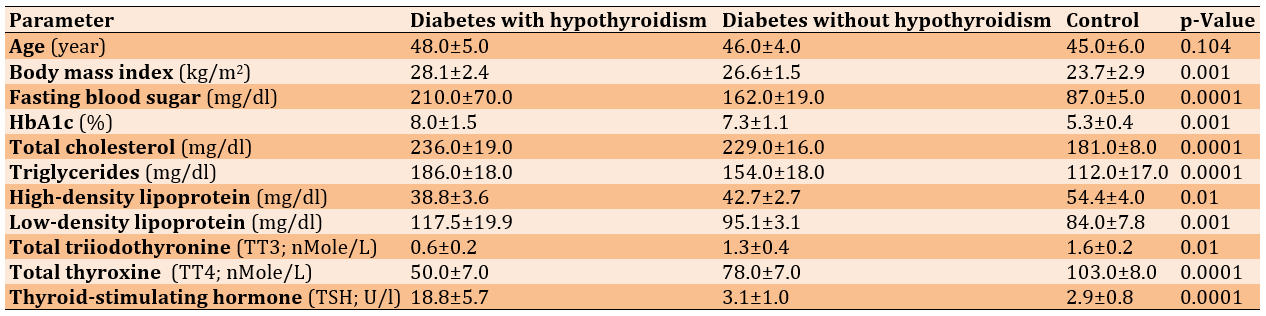
Age did not differ significantly among the groups (p=0.104). In contrast, the diabetes groups—particularly participants with hypothyroidism—had significantly higher BMI, FBS, HbA1c, total cholesterol, triglycerides, LDL-C, and TSH levels than the control group. HDL-C, TT3, and TT4 levels were significantly lower in the diabetes groups, with the most pronounced changes observed in participants with hypothyroidism (Table 1).
Table 1. Comparison of demographic, clinical, and biochemical characteristics among the study groups
The mean vitamin B12 level was 202±31ng/mL in participants with T2DM and hypothyroidism, 264±42ng/mL in those with T2DM without hypothyroidism, and 460±99ng/mL in the control group (p=0.0001).
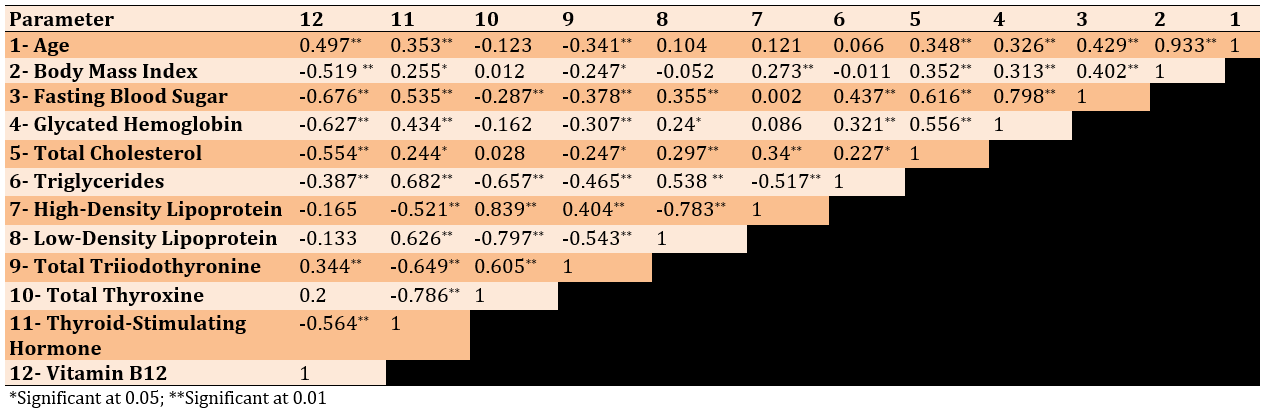
Vitamin B12 levels showed significant inverse correlations with BMI, FBS, HbA1c, TC, TG, and TSH levels (all p≤0.0001).
In contrast, B12 was positively correlated with age (p=0.0001) and TT3 (p=0.001). Correlations with HDL-C and LDL-C were weak and not statistically significant, and the positive correlation with TT4 did not reach statistical significance (r=0.2; p=0.058; Table 2).
Table 2. Correlation between vitamin B12 levels and clinical parameters
Discussion
This study aimed to assess vitamin B12 levels among three groups of Iraqi participants, including those with T2DM and hypothyroidism, those with T2DM without hypothyroidism, and healthy individuals. People with diabetes mellitus and hypothyroidism are more likely to have vitamin B12 deficiency. Hypothyroidism can reduce vitamin B12 absorption, and diabetes medications such as metformin can also affect B12 absorption. This combination of factors may worsen B12 deficiency and lead to neurological and other health problems [8, 10, 11].
According to new recommendations, metformin should be the initial glucose-lowering drug, combined with lifestyle modifications, provided there are no contraindications such as renal or hepatic disease. Despite its highly effective glucose-lowering effect, metformin has long been shown to reduce vitamin B12 levels [12]. Plasma vitamin B12 levels did not differ significantly by sex among patients with type 2 diabetes. This result is consistent with findings from other studies [13]. However, several studies have shown that plasma vitamin B12 levels are lower in males than in females [14].
We compared healthy volunteers with patients with DM, with and without hypothyroidism. Age, BMI, FBS, HbA1c, TC, TG, and TSH were measured in both the patients and healthy participants. Comparisons of age, FBS, and HbA1c among the three groups showed significantly lower values across the groups, consistent with another study [15].
In accordance with previous studies [10, 16, 17], vitamin B12 levels were significantly lower among the groups (T2DM with hypothyroidism, T2DM without hypothyroidism, and controls). Vitamin B12 insufficiency and hypothyroidism can present with similar symptoms, including tingling, numbness, weakness, fatigue, and memory loss. Therefore, it is critical to recognize and treat both conditions because hypothyroidism may conceal a vitamin B12 deficiency [11]. Vitamin B12 insufficiency may be overlooked in patients with hypothyroidism. Patients with an underactive thyroid frequently experience macrocytosis. Although they received adequate thyroxine replacement, several patients continued to experience symptoms and were later found to be vitamin B12 deficient [9].
We examined the relationships between vitamin B12 and other indicators. Vitamin B12 showed strong negative correlations with BMI, FBS, HbA1c, TC, TG, and TSH in patients with T2DM and hypothyroidism. The association between vitamin B12 and FPG and HbA1c% may be explained by the predominant role of vitamin B12 in carbohydrate metabolism [18]. Vitamin B12 is essential for fat and carbohydrate metabolism. Erythrocytes from people with vitamin B12 deficiency have been shown to contain lower levels of glutathione or enzymes needed to break down glucose into ribose [19].
In the liver, vitamin B12 deficiency significantly decreases the reduced form of DPN, increases its oxidized form, and increases coenzyme A levels. Because the glutathione, CoA, and DPN systems participate in numerous metabolic pathways, vitamin B12 deficiency may impair the maintenance of balanced enzyme systems necessary for carbohydrate utilization and fat metabolism [20].
In a sample of patients with hypothyroidism, similar associations were observed between vitamin B12 levels and TG and total cholesterol levels. Vitamin B12 acts as a coenzyme in the conversion of methylmalonyl-CoA (MM-CoA) to succinyl-CoA [10]. Vitamin B12 deficiency prevents this process, leading to MM-CoA accumulation. This accumulation inhibits carnitine palmitoyltransferase 1 (CPT1), the rate-limiting enzyme in fatty acid oxidation, thereby promoting lipogenesis. This may be the most plausible explanation for the association between poor lipid profiles and vitamin B12 insufficiency [21]. The results supported a negative association between total cholesterol and vitamin B12 and a positive correlation between HDL cholesterol and vitamin B12.
Vitamin B12 deficiency causes homocysteine to accumulate, which increases S-adenosyl-L-homocysteine levels and inhibits S-adenosyl-L-methionine-dependent methyltransferase [22, 23].
Age and vitamin B12 levels were significantly negatively correlated with TSH. TT3 and TT4 were also significantly positively correlated with vitamin B12 levels, consistent with findings by Al-Mousawi et al. [24] and Aon et al. [7]. Previous studies examining the prevalence of vitamin B12 insufficiency in patients with hypothyroidism have reported conflicting findings. The variation in reported vitamin B12 deficiency prevalence among individuals with hypothyroidism, ranging from 10% to 46% [24], may reflect differences in nutritional status and the laboratory cutoff points used to identify vitamin B12 insufficiency [24].
Conclusion
Vitamin B12 deficiency is more prevalent among diabetic patients with hypothyroidism and is an indicator of associated complications, including neuropathy, gastrointestinal disorders, and anemia.
Acknowledgments: The authors thank the patients and their families.
Ethical Permissions: The project was approved by the local ethics committee at Al-Mustansiriyah University/National Diabetes Center (1692026NDC).
Conflicts of Interest: The authors reported no conflicts of interest.
Authors' Contribution: Tahir NT (First Author), Introduction Writer/Methodologist/Main Researcher/Discussion Writer/Statistical Analyst (30%); ALShaban SAW (Second Author), Assistant Researcher/Discussion Writer/Statistical Analyst (15%); Akram RS (Third Author), Introduction Writer/Methodologist/Assistant Researcher (13%); Shalgam DO (Fourth Author), Introduction Writer/Methodologist/Assistant Researcher (12%); Ashor AW (Fifth Author), Introduction Writer/Assistant Researcher/Statistical Analyst (15%); Alrubaye HF (Sixth Author), Introduction Writer/Methodologist/ Assistant Researcher (15%)
Funding/Support: This research received no specific grant from any funding agency in the public, commercial, or not-for-profit sectors.
The two most prevalent endocrine conditions are diabetes mellitus and thyroid dysfunction, and patients often have both conditions simultaneously [1]. These disorders share several pathophysiological mechanisms and risk factors, including obesity, insulin resistance, and autoimmune dysfunction. The coexistence of diabetes and thyroid dysfunction may complicate disease management and adversely affect metabolic control. Therefore, patients with either condition may benefit from regular screening for the other. Early identification and appropriate treatment of both disorders can help reduce the risk of associated complications. Hypothyroidism, which is characterized by low levels of thyroid hormones in the blood, has also been shown to cause glucose intolerance and impaired peripheral insulin sensitivity [2]. Furthermore, hypothyroidism is associated with other metabolic conditions, such as obesity, hypertension, and dyslipidemia, all of which may exacerbate insulin resistance and contribute to the development of type 2 diabetes over time [2]. These metabolic abnormalities may impair glucose utilization and promote adipose tissue accumulation. In addition, reduced thyroid hormone activity can alter lipid metabolism and increase the risk of cardiovascular complications. The coexistence of hypothyroidism and insulin resistance may make glycemic control more difficult in affected patients. Therefore, regular assessment of thyroid function and metabolic parameters may support the early detection and management of these interrelated conditions. Vitamins, such as A, E, D, and B, have a moderating effect on thyroid function. Previous studies have documented vitamin deficiencies in patients with type 2 diabetes mellitus (T2DM) [3]. These deficiencies may influence glucose metabolism, insulin sensitivity, and the regulation of thyroid hormone synthesis and activity. In particular, inadequate vitamin D and B-vitamin levels have been associated with metabolic disturbances in individuals with T2DM. Assessing and addressing relevant vitamin deficiencies may therefore be an important component of the comprehensive management of patients with coexisting thyroid dysfunction and diabetes.
Because it is essential for many metabolic processes, vitamin B12 is one of the most important B-complex vitamins. Cobalamin, commonly known as vitamin B12, is an essential component of enzymes such as methylmalonyl-CoA mutase and plays a key role in hematopoiesis [4]. Although the causes may be complex, the comorbidity of other autoimmune conditions and dietary practices are the main causes of vitamin B12 inadequacy in patients with TD [5]. Vitamin B12 is also involved in DNA synthesis, neurological function, and healthy red blood cell production. Its deficiency can result in megaloblastic anemia, fatigue, peripheral neuropathy, and cognitive changes. Patients with autoimmune thyroid disorders may be particularly susceptible to B12 deficiency because of the potential coexistence of pernicious anemia and other autoimmune diseases. In addition, individuals following vegetarian or vegan diets may have an increased risk of inadequate B12 intake because the vitamin is found primarily in animal-derived foods. Consequently, monitoring serum vitamin B12 levels may be beneficial in patients with thyroid disease who present with anemia, neurological symptoms, or other clinical indicators of deficiency.
Vitamin B12 deficiency frequently coexists with hypothyroidism [6]. The association between autoimmune thyroid disorders and vitamin B12 deficiency is probably related to the coexistence of other autoimmune conditions, such as atrophic gastritis and pernicious anemia, both of which reduce vitamin B12 absorption [7]. Pernicious anemia is characterized by the loss of intrinsic factor, which is necessary for the absorption of vitamin B12 in the terminal ileum. Atrophic gastritis may further impair absorption by damaging the gastric mucosa and reducing gastric acid production. Patients with autoimmune thyroid disease may therefore be at increased risk of developing megaloblastic anemia and other manifestations of vitamin B12 deficiency. Clinical symptoms may include weakness, pallor, glossitis, numbness, tingling, impaired balance, and cognitive difficulties. Because some neurological complications can progress despite relatively mild hematological abnormalities, early recognition of vitamin B12 deficiency is important. Routine assessment of vitamin B12 levels and related biomarkers may consequently be considered in patients with hypothyroidism, particularly those with autoimmune disease, anemia, or neurological symptoms. The prevalence of vitamin B12 deficiency among individuals with hypothyroidism increases with age [8]. This may be associated with age-related changes in gastrointestinal function, reduced dietary intake, and the increased occurrence of autoimmune disorders in older adults. Older patients with hypothyroidism may also experience nonspecific symptoms, such as fatigue, weakness, and cognitive changes, which can overlap with manifestations of vitamin B12 deficiency. Therefore, screening for vitamin B12 deficiency may be particularly important in older individuals with hypothyroidism who present with anemia, neurological symptoms, or persistent fatigue. Patients with hypothyroidism and vitamin B12 deficiency typically experience symptoms associated with both conditions, such as weakness, fatigue, itching, loss of sensation, and poor memory retention [9, 10]. These symptoms may overlap, making it difficult to determine which condition primarily drives a patient’s clinical presentation. Vitamin B12 deficiency may
additionally cause paresthesia, impaired balance, glossitis, and megaloblastic anemia, whereas hypothyroidism is often associated with cold intolerance, weight gain, dry skin, and constipation. Recognizing the potential coexistence of these disorders matters because appropriate treatment may improve symptoms and help prevent progression to neurological complications.
This study assessed vitamin B12 levels among three groups of Iraqi participants: those with T2DM and hypothyroidism, those with T2DM without hypothyroidism, and healthy individuals. This comparison was intended to determine whether the coexistence of T2DM and hypothyroidism is associated with a greater risk of vitamin B12 deficiency than T2DM alone. The study was necessary because vitamin B12 deficiency can cause hematological and neurological complications that may be overlooked or misattributed to diabetes or thyroid dysfunction. In addition, evaluating vitamin B12 status in the Iraqi population may provide locally relevant evidence to support early detection, appropriate monitoring, and targeted clinical management. The findings may also help inform future screening recommendations for vitamin B12 deficiency among patients with T2DM, particularly those with coexisting hypothyroidism.
Materials and Methods
This comparative cross-sectional study was conducted in 2025 at the National Diabetes Center, Mustansiriyah University, Iraq. We enrolled 90 participants and divided them into three groups of 30. Group 1 consisted of patients with type 2 diabetes mellitus and hypothyroidism. Group 2 consisted of patients with type 2 diabetes mellitus without hypothyroidism who were aged 40–55 years. Group 3 consisted of healthy controls aged 40–55 years.
Participants were eligible for inclusion if they agreed to participate in the study and provided informed consent. They had to belong to one of the predefined study groups and have complete demographic, clinical, and laboratory information.
After enrollment, we recorded each participant’s age, height, and weight. Blood samples were then collected to assess thyroid function, glycemic status, lipid profile, renal function, and vitamin B12 levels. Serum total triiodothyronine (TT3), total thyroxine (TT4), and thyroid-stimulating hormone (TSH) concentrations were determined using the MiniVIDAS instrument with bioMérieux kits (France). FSG, HbA1c, lipid profile parameters, blood urea, and serum creatinine were analyzed using the Cobas c111 analyzer (Germany). Serum vitamin B12 levels were measured using the Cobas e411 analyzer (Germany). All laboratory assessments were performed according to the manufacturers’ instructions. We recorded demographic characteristics, including age, height, and weight, for each participant.
Microsoft Excel was used for data organization and statistical analysis.
Findings
Age did not differ significantly among the groups (p=0.104). In contrast, the diabetes groups—particularly participants with hypothyroidism—had significantly higher BMI, FBS, HbA1c, total cholesterol, triglycerides, LDL-C, and TSH levels than the control group. HDL-C, TT3, and TT4 levels were significantly lower in the diabetes groups, with the most pronounced changes observed in participants with hypothyroidism (Table 1).
Table 1. Comparison of demographic, clinical, and biochemical characteristics among the study groups
The mean vitamin B12 level was 202±31ng/mL in participants with T2DM and hypothyroidism, 264±42ng/mL in those with T2DM without hypothyroidism, and 460±99ng/mL in the control group (p=0.0001).
Vitamin B12 levels showed significant inverse correlations with BMI, FBS, HbA1c, TC, TG, and TSH levels (all p≤0.0001).
In contrast, B12 was positively correlated with age (p=0.0001) and TT3 (p=0.001). Correlations with HDL-C and LDL-C were weak and not statistically significant, and the positive correlation with TT4 did not reach statistical significance (r=0.2; p=0.058; Table 2).
Table 2. Correlation between vitamin B12 levels and clinical parameters
Discussion
This study aimed to assess vitamin B12 levels among three groups of Iraqi participants, including those with T2DM and hypothyroidism, those with T2DM without hypothyroidism, and healthy individuals. People with diabetes mellitus and hypothyroidism are more likely to have vitamin B12 deficiency. Hypothyroidism can reduce vitamin B12 absorption, and diabetes medications such as metformin can also affect B12 absorption. This combination of factors may worsen B12 deficiency and lead to neurological and other health problems [8, 10, 11].
According to new recommendations, metformin should be the initial glucose-lowering drug, combined with lifestyle modifications, provided there are no contraindications such as renal or hepatic disease. Despite its highly effective glucose-lowering effect, metformin has long been shown to reduce vitamin B12 levels [12]. Plasma vitamin B12 levels did not differ significantly by sex among patients with type 2 diabetes. This result is consistent with findings from other studies [13]. However, several studies have shown that plasma vitamin B12 levels are lower in males than in females [14].
We compared healthy volunteers with patients with DM, with and without hypothyroidism. Age, BMI, FBS, HbA1c, TC, TG, and TSH were measured in both the patients and healthy participants. Comparisons of age, FBS, and HbA1c among the three groups showed significantly lower values across the groups, consistent with another study [15].
In accordance with previous studies [10, 16, 17], vitamin B12 levels were significantly lower among the groups (T2DM with hypothyroidism, T2DM without hypothyroidism, and controls). Vitamin B12 insufficiency and hypothyroidism can present with similar symptoms, including tingling, numbness, weakness, fatigue, and memory loss. Therefore, it is critical to recognize and treat both conditions because hypothyroidism may conceal a vitamin B12 deficiency [11]. Vitamin B12 insufficiency may be overlooked in patients with hypothyroidism. Patients with an underactive thyroid frequently experience macrocytosis. Although they received adequate thyroxine replacement, several patients continued to experience symptoms and were later found to be vitamin B12 deficient [9].
We examined the relationships between vitamin B12 and other indicators. Vitamin B12 showed strong negative correlations with BMI, FBS, HbA1c, TC, TG, and TSH in patients with T2DM and hypothyroidism. The association between vitamin B12 and FPG and HbA1c% may be explained by the predominant role of vitamin B12 in carbohydrate metabolism [18]. Vitamin B12 is essential for fat and carbohydrate metabolism. Erythrocytes from people with vitamin B12 deficiency have been shown to contain lower levels of glutathione or enzymes needed to break down glucose into ribose [19].
In the liver, vitamin B12 deficiency significantly decreases the reduced form of DPN, increases its oxidized form, and increases coenzyme A levels. Because the glutathione, CoA, and DPN systems participate in numerous metabolic pathways, vitamin B12 deficiency may impair the maintenance of balanced enzyme systems necessary for carbohydrate utilization and fat metabolism [20].
In a sample of patients with hypothyroidism, similar associations were observed between vitamin B12 levels and TG and total cholesterol levels. Vitamin B12 acts as a coenzyme in the conversion of methylmalonyl-CoA (MM-CoA) to succinyl-CoA [10]. Vitamin B12 deficiency prevents this process, leading to MM-CoA accumulation. This accumulation inhibits carnitine palmitoyltransferase 1 (CPT1), the rate-limiting enzyme in fatty acid oxidation, thereby promoting lipogenesis. This may be the most plausible explanation for the association between poor lipid profiles and vitamin B12 insufficiency [21]. The results supported a negative association between total cholesterol and vitamin B12 and a positive correlation between HDL cholesterol and vitamin B12.
Vitamin B12 deficiency causes homocysteine to accumulate, which increases S-adenosyl-L-homocysteine levels and inhibits S-adenosyl-L-methionine-dependent methyltransferase [22, 23].
Age and vitamin B12 levels were significantly negatively correlated with TSH. TT3 and TT4 were also significantly positively correlated with vitamin B12 levels, consistent with findings by Al-Mousawi et al. [24] and Aon et al. [7]. Previous studies examining the prevalence of vitamin B12 insufficiency in patients with hypothyroidism have reported conflicting findings. The variation in reported vitamin B12 deficiency prevalence among individuals with hypothyroidism, ranging from 10% to 46% [24], may reflect differences in nutritional status and the laboratory cutoff points used to identify vitamin B12 insufficiency [24].
Conclusion
Vitamin B12 deficiency is more prevalent among diabetic patients with hypothyroidism and is an indicator of associated complications, including neuropathy, gastrointestinal disorders, and anemia.
Acknowledgments: The authors thank the patients and their families.
Ethical Permissions: The project was approved by the local ethics committee at Al-Mustansiriyah University/National Diabetes Center (1692026NDC).
Conflicts of Interest: The authors reported no conflicts of interest.
Authors' Contribution: Tahir NT (First Author), Introduction Writer/Methodologist/Main Researcher/Discussion Writer/Statistical Analyst (30%); ALShaban SAW (Second Author), Assistant Researcher/Discussion Writer/Statistical Analyst (15%); Akram RS (Third Author), Introduction Writer/Methodologist/Assistant Researcher (13%); Shalgam DO (Fourth Author), Introduction Writer/Methodologist/Assistant Researcher (12%); Ashor AW (Fifth Author), Introduction Writer/Assistant Researcher/Statistical Analyst (15%); Alrubaye HF (Sixth Author), Introduction Writer/Methodologist/ Assistant Researcher (15%)
Funding/Support: This research received no specific grant from any funding agency in the public, commercial, or not-for-profit sectors.
Keywords:
Diabetes Mellitus [MeSH], Hypothyroidism [MeSH], Lipids [MeSH], Thyroid Function Test [MeSH], Vitamin B12 [MeSH]
References
1. Tahir NT, Falih IQ, Alkubaisi MR, Alabdaly AR. Apelin as a potential marker in Iraqi children with type 1 diabetes mellitus. J Contemp Med Sci. 2023;9(6):408-12. [Link] [DOI:10.22317/jcms.v9i6.1425]
2. Isaa MQ, Tahir NT. Effect of apelin level in Iraqi diabetic women with hypothyroidism. POLSKI MERKURIUSZ LEKARSKI. 2025;53(2):218-21. [Link] [DOI:10.36740/Merkur202502110]
3. Taheriniya S, Arab A, Hadi A, Fadel A, Askari G. Vitamin D and thyroid disorders: A systematic review and meta-analysis of observational studies. BMC Endocr Disord. 2021;21(1):171. [Link] [DOI:10.1186/s12902-021-00831-5]
4. Benites-Zapata VA, Ignacio-Cconchoy FL, Ulloque-Badaracco JR, Hernandez-Bustamante EA, Alarcón-Braga EA, Al-Kassab-Córdova A, et al. Vitamin B12 levels in thyroid disorders: A systematic review and meta-analysis. Front Endocrinol. 2023;14:1070592. [Link] [DOI:10.3389/fendo.2023.1070592]
5. Knezevic J, Starchl C, Tmava Berisha A, Amrein K. Thyroid-gut-axis: How does the microbiota influence thyroid function?. Nutrients. 2020;12(6):1769. [Link] [DOI:10.3390/nu12061769]
6. Gupta R, Choudhary S, Chatterjee T. A study on vitamin B12 levels in hypothyroid patients presenting to a tertiary care teaching hospital. Cureus. 2023;15(8):e44197. [Link] [DOI:10.7759/cureus.44197]
7. Aon M, Taha S, Mahfouz K, Ibrahim MM, Aoun AH. Vitamin B12 (Cobalamin) deficiency in overt and subclinical primary hypothyroidism. Clin Med Insights Endocrinol Diabetes. 2022;15:11795514221086634. [Link] [DOI:10.1177/11795514221086634]
8. Batulwar PS, Anjankar A. Individuals diagnosed with type 2 diabetes mellitus and the status of vitamin B12 deficiency: A review. Cureus. 2024;16(2):e55103. [Link] [DOI:10.7759/cureus.55103]
9. Ahmed GA. Serum Vitamin D and B12 Deficiencies as Predictors of Thyroid Dysfunction: A Cross Sectional Analysis. J Sulaimani Med College. 2025;15(2):245-52. [Link] [DOI:10.17656/jsmc.10508]
10. Kacharava T, Giorgadze E, Janjgava S, Lomtadze N, Taboridze I. Correlation between vitamin B12 deficiency and autoimmune thyroid diseases. Endocr Metab Immune Disord Drug Targets. 2023;23(1):86-94. [Link] [DOI:10.2174/1871530322666220627145635]
11. Aktaş HŞ. Vitamin B12 and Vitamin D levels in patients with autoimmune hypothyroidism and their correlation with anti-thyroid peroxidase antibodies. Med Princ Pract. 2020;29(4):364-70. [Link] [DOI:10.1159/000505094]
12. Kibirige D, Mwebaze R. Vitamin B12 deficiency among patients with diabetes mellitus: Is routine screening and supplementation justified?. J Diabetes Metab Disord. 2013;12(1):17. [Link] [DOI:10.1186/2251-6581-12-17]
13. Shahwan M, Hassan N, Noshi A, Banul N. Prevalence and risk factors of vitamin B12 deficiency among patients with type II diabetes on metformin: A study from northern region of United Arab Emirates. Asian J Pharm Clin Res. 2018;11(8). [Link] [DOI:10.22159/ajpcr.2018.v11i8.26052]
14. Shahwan M, Ait Gacem S, Shahwan M, Najjar O. Assessment of vitamin B12 deficiency and associated risk factors among type 2 diabetic patients in Palestine. Hum Nutr Metab. 2020;20:200113. [Link] [DOI:10.1016/j.hnm.2020.200113]
15. Madlool AK, Numan HA, Ali HA, Mashkour MS, Ali RA. Vitamin B12 as risk marker in diabetic retinopathy patients: Case-control study. Front Health Inform. 2024;13(3). [Link]
16. Al Zoubi MS, Al Kreasha R, Aqel S, Saeed A, Al-Qudimat AR, Al-Zoubi RM. Vitamin B12 deficiency in diabetic patients treated with metformin: A narrative review. Ir J Med Sci. 2024;193(4):1827-35. [Link] [DOI:10.1007/s11845-024-03634-4]
17. Abed HH, Ali AM, Al-Ziaydi AG. Evaluation level of serum vitamin B12 in Iraqi patients with diabetes mellitus type 2, who used the metformin drug as a hypoglycemic agent. Pak J Pharm Sci. 2023;36(2):425-9. [Link]
18. Al Saeed RR, Baraja MA. Vitamin B12 deficiency in patients with type 2 diabetes mellitus using metformin and the associated factors in Saudi Arabia. Saudi Med J. 2021;42(2):161-5. [Link] [DOI:10.15537/smj.2021.2.25693]
19. Kadhim NM, Hussain KS. The impact of vitamin D3 and B12 in patients with thyroid disorders in Kirkuk-Iraq. Int J Health Sci. 2022;6(S6):8036-49. [Link] [DOI:10.53730/ijhs.v6nS6.12200]
20. Adaikalakoteswari A, Jayashri R, Sukumar N, Venkataraman H, Pradeepa R, Gokulakrishnan K, et al. Vitamin B12 deficiency is associated with adverse lipid profile in Europeans and Indians with type 2 diabetes. Cardiovasc Diabetol. 2014;13:129. [Link] [DOI:10.1186/s12933-014-0129-4]
21. Al-Musharaf S, Aljuraiban GS, Danish Hussain S, Alnaami AM, Saravanan P, Al-Daghri N. Low serum vitamin B12 levels are associated with adverse lipid profiles in apparently healthy young Saudi women. Nutrients. 2020;12(8):2395. [Link] [DOI:10.3390/nu12082395]
22. Khan A, Shah N, Thakkar M. Study of clinical profile of hypothyroidism with emphasis on vitamin B12 levels. Headache. 2019;28:33-7. [Link]
23. Emamifar A, Hansen IM. The influence of thyroid diseases, diabetes mellitus, primary hyperparathyroidism, vitamin B12 deficiency and other comorbid autoimmune diseases on treatment outcome in patients with rheumatoid arthritis: An exploratory cohort study. Medicine. 2018;97(21):e10865. [Link] [DOI:10.1097/MD.0000000000010865]
24. Al-Mousawi M, Salih S, Ahmed A, Abdullah B. Serum vitamin B12 and holotranscobalamin levels in subclinical hypothyroid patients in relation to thyroid-stimulating hormone (TSH) levels and the positivity of anti-thyroid peroxidase antibodies: A case-control study. Cureus. 2024;16(6):e61513. [Link] [DOI:10.7759/cureus.61513]